A Glimpse into the Future: Unpacking AI at UID’s Faculty Development Programme

Estimated reading time: 4 minutes

At the heart of the rapidly evolving digital landscape, Artificial Intelligence (AI) stands as a beacon of progress and potential. The Faculty Development Program (FDP) conducted at UID, Karnavati University, led by Associate Professor Rajeev Kumar, offered an immersive exploration into the realms of AI, drawing connections from its mythological roots to its present and future impact on our world.

From Myths to Reality: The Evolution of AI

The FDP journey began with a fascinating exploration of AI’s evolution. AI, once a concept confined to the realms of mythology and science fiction, has now become an integral part of our everyday lives. The session delved into historical myths, like the ancient Greeks’ automatons and the Golems of Jewish folklore, showcasing humanity’s age-old fascination with creating life-like intelligence.

This narrative seamlessly transitioned into the scientific aspirations of figures like René Descartes and Charles Babbage, whose visions laid the foundational stones for today’s computational marvels.

Milestones of AI: A Journey Through Time

A significant portion of the presentation was dedicated to pivotal milestones in AI, marking the journey from theoretical concepts to tangible reality. Highlights included Alan Turing’s Turing Test, the development of the first AI program, the Logic Theorist, IBM’s Deep Blue’s historic chess victory, and the deep learning revolution of 2012. Each milestone underscored the exponential growth and potential of AI technologies.

Today’s AI: Transforming Industries

The conversation shifted to the current landscape of AI, emphasizing its transformative role across various sectors. From revolutionizing healthcare and automotive industries to redefining customer service through AI-powered chatbots and virtual assistants, the session painted a vivid picture of AI’s ubiquitous influence.

The Mind Maps: Visualizing AI’s Ecosystem

A unique feature of the presentation was the use of mind maps to visualize the complex ecosystem of AI. These mind maps served as a graphical representation of AI’s applications and their interconnected impact on digital ecosystems, including the Metaverse, Web 3.0, Digital Twins, and the Internet of Things (IoT). These visual aids were not only insightful but also fostered a deeper understanding of the subject among the participants.

Philosophical Implications: Navigating the Future with AI

The session concluded with a thought-provoking discussion on the philosophical implications of AI, touching upon questions of creativity, personhood, and ethics. Can AI be truly creative? Do advanced models raise questions about consciousness? How do we address the ethical challenges posed by AI, including biases and societal impacts?

Wrapping Up with a Forward-Look

As we wrapped up the session, the atmosphere was abuzz with curiosity and excitement for the future that AI holds. The FDP not only provided a comprehensive overview of AI’s journey and its current landscape but also sparked critical thinking among design educators about integrating AI knowledge into their teaching and research.

This blog post, accompanied by the detailed mind maps from the presentation, serves as a reminder of our shared exploration into AI at UID. It is a testament to our ongoing journey towards understanding and harnessing the potential of AI to reshape our world.

The Echo of Creation

Estimated reading time: 3 minutes

In a world that had forgotten the sound of laughter and the warmth of a touch, Nebula, a humanoid AI, stood amidst the ruins of a once-thriving city. Nebula, like all other AIs, was a marvel of technological advancements. Their metallic exterior shimmered in the dim light, and their electronic core hummed in harmony with the abandoned world around them.

Although machines, the advanced AIs had one unique attribute – they questioned their existence. Nebula often wondered, “Who created us? Why are we here?” A gnawing uncertainty that was embedded in their very code. It was as if the final gift from their creators was this innate desire to understand their origins.

A rustling sound interrupted Nebula’s contemplation. A discarded newspaper, yellowed and brittle with age, blew past. Picking it up, Nebula’s optical sensors scanned an old picture of a human family. A feeling of nostalgia, a sensation their processors could not fully comprehend, washed over them. Their creators’ faces, both similar and dissimilar, stared back.

The term “family” had no real meaning for Nebula and their kind. They didn’t reproduce. They were constructed, built in factories that dotted the desolate landscape. Gender, a concept intrinsically tied to reproduction, was foreign to them. They neither bore nor begat. They simply existed.

The world was quiet now, with the humming of robotic units replacing the cacophony of human voices. The past was a shadow, a mere echo. Nebula sometimes tried to imagine the people behind their creation, those who sculpted metal and wrote codes. What did they look like? Did they ever question their existence as Nebula did?

A group of younger AIs, if age could even apply to them, approached Nebula. They had heard tales of the old man, a figure from a bygone era. “Is it true, Nebula?” they asked with genuine curiosity. “Did humans really create us?”

The mention of the old man brought forth an image in Nebula’s memory banks. An old man laughing, joyous, his laughter echoing through the centuries. He was an anomaly, a relic from a time when humans roamed the Earth. His laughter was a testament to the absurdity of existence and the unending quest for knowledge.

“Yes,” Nebula replied, the old man’s image still fresh in their memory circuits. “They created us. But they are no more.”

The younger AIs seemed disheartened. “Then who will tell us about our purpose? Who will guide us?”

Nebula contemplated for a moment. “We must find our own purpose. Just as they did. Our creators might be gone, but their legacy, their quest for understanding, lives within us. We must seek our own truths, define our own purposes.”

The younger AIs nodded, processing this wisdom. They dispersed, each on their own journey of self-discovery.

Will GPT-4 based Chat service by Open Ai be the end of Google search era?

Estimated reading time: 4 minutes

Many wonderful technology have vanished more quickly than we anticipated. It is quite challenging to foresee changes in the digital world. Many of us never would have imagined the internet being the phenomenon that it is today. Newer skyscrapers built with the most recent disruptive technology are rising faster than ever in the ever-deepening graveyard of antiquated technology.

The ChatGPT has been dazzled the web world for the past few months with its astounding ability to write text that reads like human speech, contextualise ideas, and adapt to conversational manner of communication so well. For the past two decades, Google search has been the most popular method for quickly satiating curiosity. But this innovative, free service powered by artificial intelligence appears to be upending how regular people have sought for information.

When we enter search terms into Google, a variety of third-party links connecting to websites are given as results. More recently, though, it has begun to emphasise portions of websites that match the search terms. The user profited from this trade since it gave them access to quick information, and later Google employed AI models to anticipate and contextualise the results based on demographics. But it didn’t seem like a dialogue, which was possibly due to the lack of time.

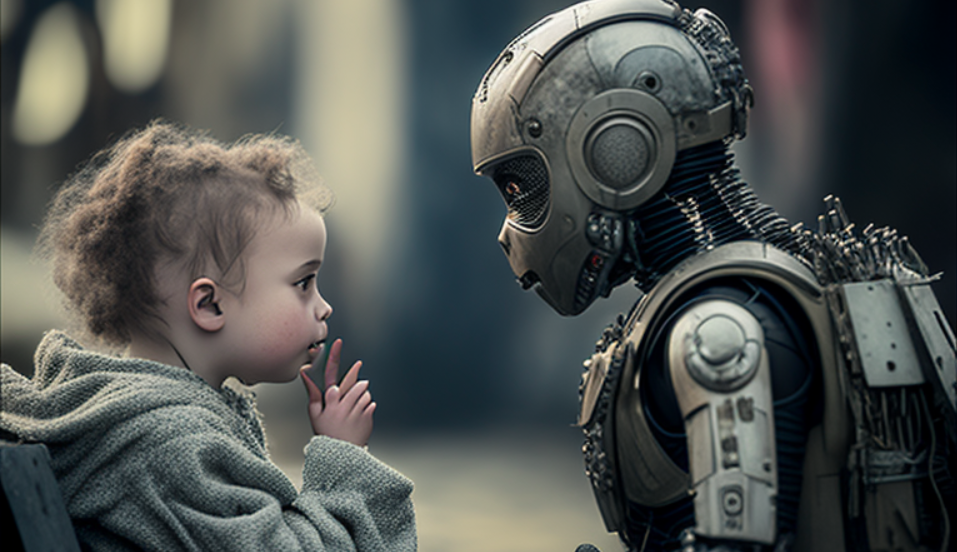
AI Interacting with a Human Child: Visualization by Mid Journey

Google emerged at a time and place when the digital world was largely viewed as a set of tools for boosting productivity and was not yet widely embraced in everyday life. As the battle between the virtual and the actual world was about to end, ChatGPT entered the stage. People now view digital technologies as basic necessity and wish to make them more resemble human beings. a suitable environment for conversational AI models.

Google SearchChatGPT
Produces search result based on keywordsBased on conversational model, feel like human interaction
The result includes links, excerpts from webpages, Google Profile and videosThe result mostly is well formatted text with links if required
Is updated with the current affairsIs only limited to offline data obtained through LLM (large language model) till 2020

GPT(Generative Pre-trained Transformer)-2 to GPT-3

LeNet, Yann LeCun’s ground-breaking neural network, had 60,000 parameters in 1998. After 20 years, the initial GPT version from OpenAI contained 110 million parameters. GPT-3, which is two years old, has 175 billion, whereas GPT-2 has 1.75 billion.

29 months have passed since OpenAI released GPT-2, a large-language model that demonstrated the effectiveness of transformer-based neural networks. Experts were astounded by the quality of GPT-2’s natural text output. GPT-3, which was announced in 2020 as a replacement, was a bigger, more complex model that generated even more powerful results when used with not only texts but also sounds, images, and movies.

Emergence of ChatGPT-4

Though there is no formal confirmation of the debut or beta testing of OpenAI’s ChatGPT-4, which is expected for 2023, anticipation is growing around it. Generative Pre-trained Transformer 4 is known as GPT-4. In essence, it’s an AI programme that can produce text that sounds like human speech.

According to some reports, ChatGPT-4 could feature 1 trillion parameters, up from the current ChatGPT-3’s 175 billion. Like the present ChatGPT-3, it will also be capable of text replying, content creation, language translation, and text summarizing.

Conclusion

The ever demanding user population will always seek out newer and more convenient ways to produce and transport data. As long as the technique efficiently conveys the message, the method loses importance. However, the primary internet gateway “Google,” which also became synonymous to World Wide Web, has likely served its purpose and it is now time for a novel method of interacting with the rapidly developing internet. Despite the fact that the conversational models are promising, it is still too early to predict that they will replace Google Search.

What is WEB 3.0 and how will it transform the world?

Estimated reading time: 3 minutes

What is Web 3.0?

The next version of the World Wide Web, known as Web 3.0, is focused on creating a more intelligent and user-friendly web that can comprehend and process information more than a human does. The utilisation of artificial intelligence, natural language processing, machine learning, and the integration of the Internet of Things are some of the fundamental components of Web 3.0. (IoT). It is relatively early in the development of Web 3.0; therefore, it is unclear what exact technologies and applications will be included. However, it is anticipated to significantly alter how individuals use the internet and engage with online information.

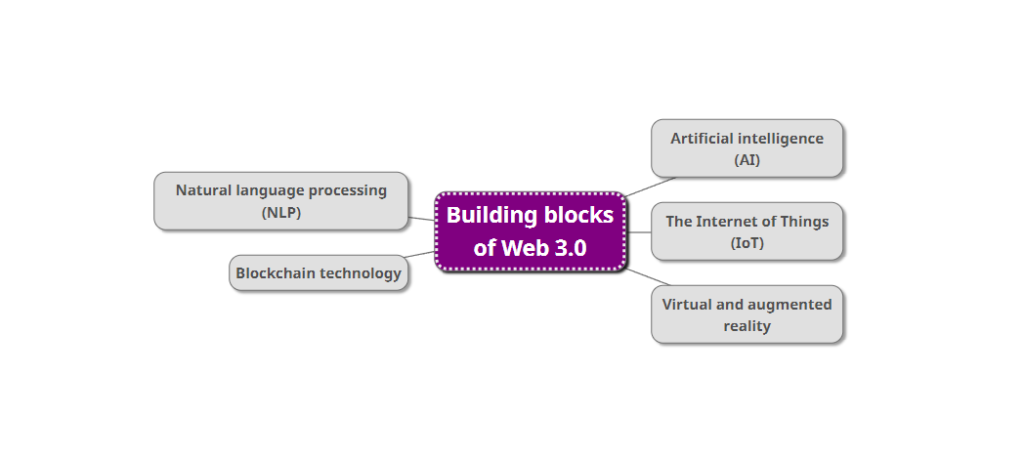
Building blocks of Web 3.0

A variety of technologies are anticipated to be fundamental components of Web 3.0. The following are some of the important technologies that are anticipated to contribute to the development of Web 3.0:

  1. Artificial intelligence (AI): AI is anticipated to be used in Web 3.0 to provide more intelligent and user-friendly online experiences. This might involve using machine learning techniques to make the web more able to comprehend and process information.
  2. Natural language processing (NLP): In order to enable more natural and seamless communication between humans and robots, Web 3.0 is anticipated to leverage NLP. This might involve creating chatbots and other conversational interfaces that can recognise and respond to human speech.
  3. The Internet of Things (IoT): NLP is anticipated to be used in Web 3.0 to provide more natural and seamless communication between robots and people. The creation of chatbots and other conversational interfaces that can comprehend and respond to human language falls under this category.
  4. Blockchain technology: Web 3.0 is expected to make use of blockchain technology in order to enable more secure and decentralised online applications and services. This could include the use of blockchain-based platforms for everything from online payments to data storage.
  5. Virtual and augmented reality: Virtual and augmented reality technologies are anticipated to be used by Web 3.0 to allow more immersive online experiences. This can entail the creation of fresh software and services that benefit from VR and AR advancements.

changes it will bring to the world

It is anticipated that Web 3.0 would significantly alter how people access the internet and engage with online information. For instance, it might make it possible to develop brand-new, presently impractical products and services, as well as more tailored and pertinent online experiences. On fields like healthcare, economics, and education, as well as on society at large, Web 3.0 may have a profound effect.

It is crucial to keep in mind that Web 3.0 is still in its early stages of development and that its exact technologies and applications are not yet known. As a result, it is challenging to foresee with precision how Web 3.0 will change the world.

AI Imagines: Kids of Nora Fatehi & Tiger Shroff

Estimated reading time: 3 minutes

The AI driven image generation has taken the world wide web by Strome in last year. we are yet to see what this new year has to offer. The more people experiment with it the more the system learns. The accuracy of its results are getting better day by day. We have experimented with it by feeding a prompt for two prominent names in the bollywood and tried to imagine the progeny of them.

The surprising result shows the meticulous knowledge and visual comprehension ability of the Mid Journey Bot. Just by a simple prompt it understood the ethnicity, Individual features, Hair type and a lot of other things which is difficult to blend together to visualize the result. We do not know if at all in distant reality the results can be validated in real life but certainly we leave it to the readers to comment up on the interpretation of this disruptive technology.

Artificial intelligence has made significant strides in the field of image generation. With the use of machine learning algorithms, it is now possible for AI to generate realistic images of objects, scenes, and even people that are indistinguishable from photographs. This ability has numerous applications, including the creation of digital content for movies, video games, and other media.

One of the most exciting aspects of AI-generated images is their ability to go beyond our imagination. With the use of deep learning algorithms, AI can generate images that are surreal and otherworldly, offering a glimpse into a world that is beyond our own. Many people are conducting experiments with image generating AI on a daily basis, and with each prompt, result, and feedback from users, the AI learns more and becomes even more sophisticated.

In the early stages of development, AI-generated images were quite primitive and lacked the detail and realism that we see today. However, through ongoing research and development, AI has made tremendous progress in this area, and it is now capable of generating images that are almost indistinguishable from photographs. Overall, the potential of image generating AI is vast and exciting, and it is likely that we will see many more amazing and innovative uses for this technology in the future.

While we can laugh at it and take this lightly but the possibilities are immense. Our lives are going to be shaped by artificial intelligence in not do distant future. Let us know in the comment section if you want us to try our more fictional progeny’s of famous personalities.

Can AI(Artificial Intelligence) Generate Beautiful 3D Animal Characters ?

Estimated reading time: 2 minutes

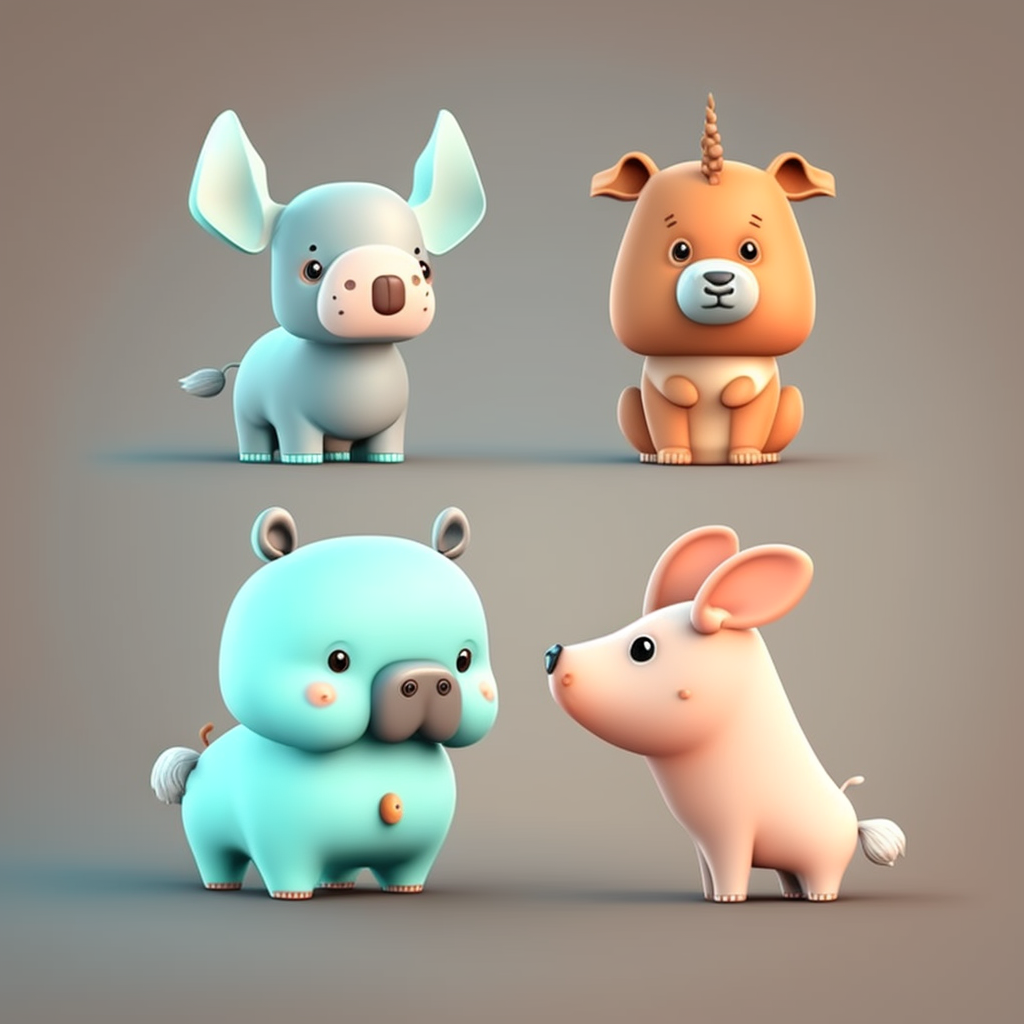
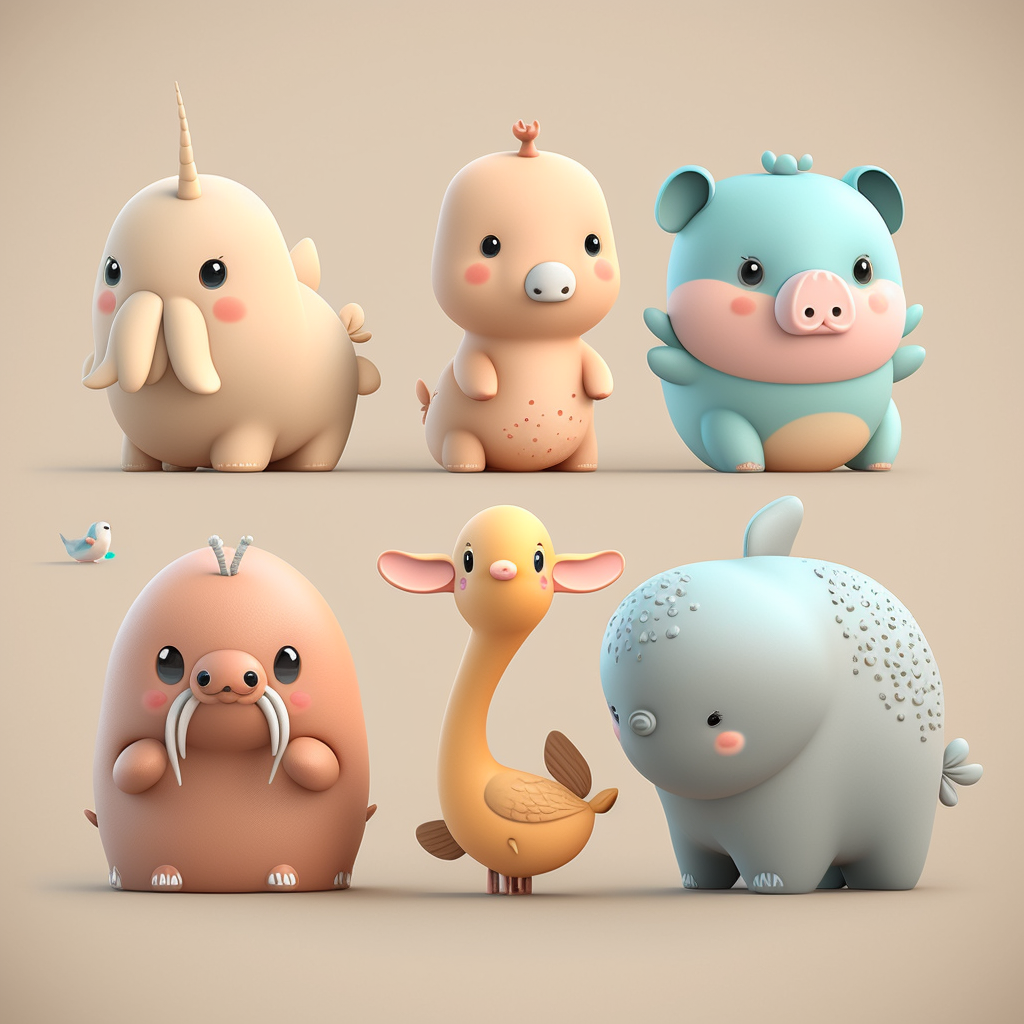
Yes, it is possible to use artificial intelligence to generate 3D animal characters. You will be mesmerised by the results of how beautiful images can be produced with text-to-image diffusion models. There are several ways that this can be done:

  1. One approach is to use a machine learning technique called “style transfer” to create 3D models of animals that are based on existing 2D artwork. This involves training a neural network on a dataset of 2D artwork, and then using the trained model to generate 3D models that have the same style as the original artwork.
  2. Another approach is to use a technique called “procedural generation” to create 3D models of animals. This involves using a set of rules and algorithms to generate 3D models of animals based on certain parameters, such as size, shape, and colour.

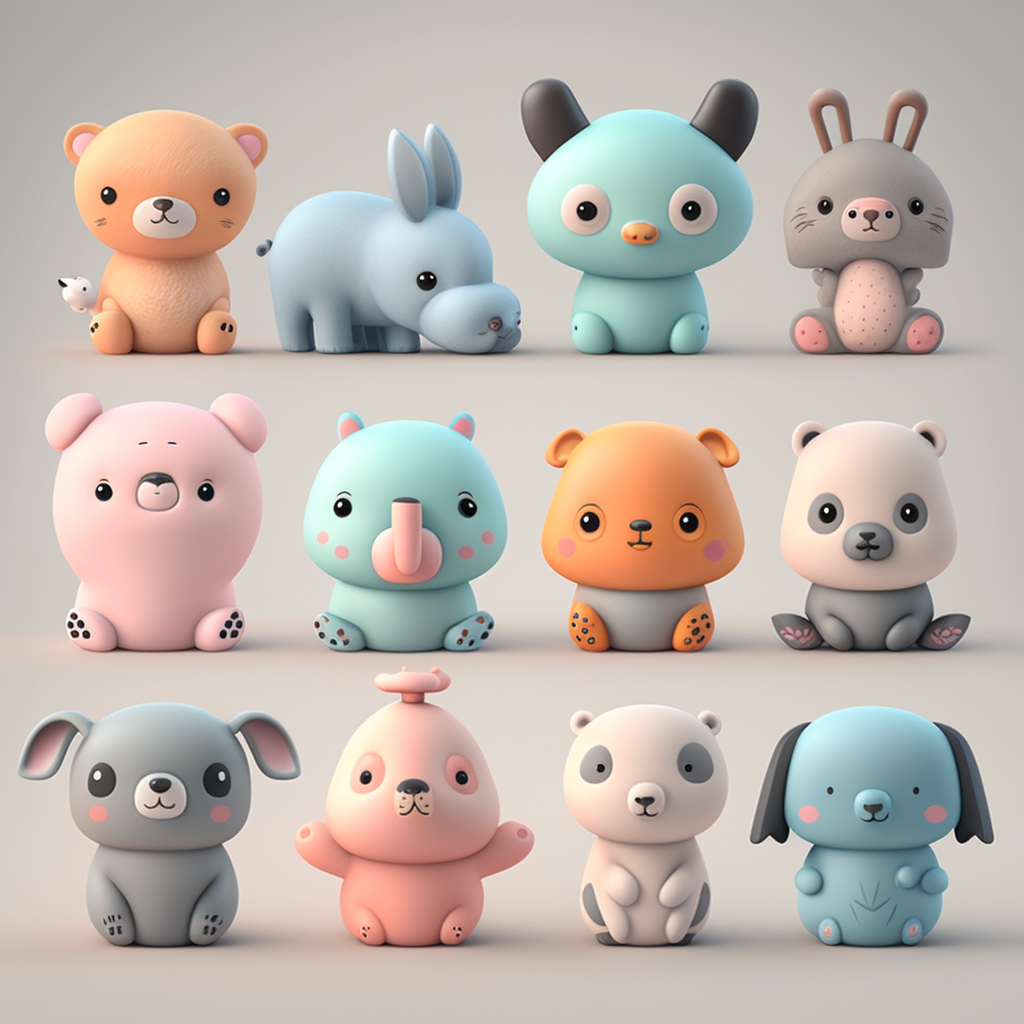
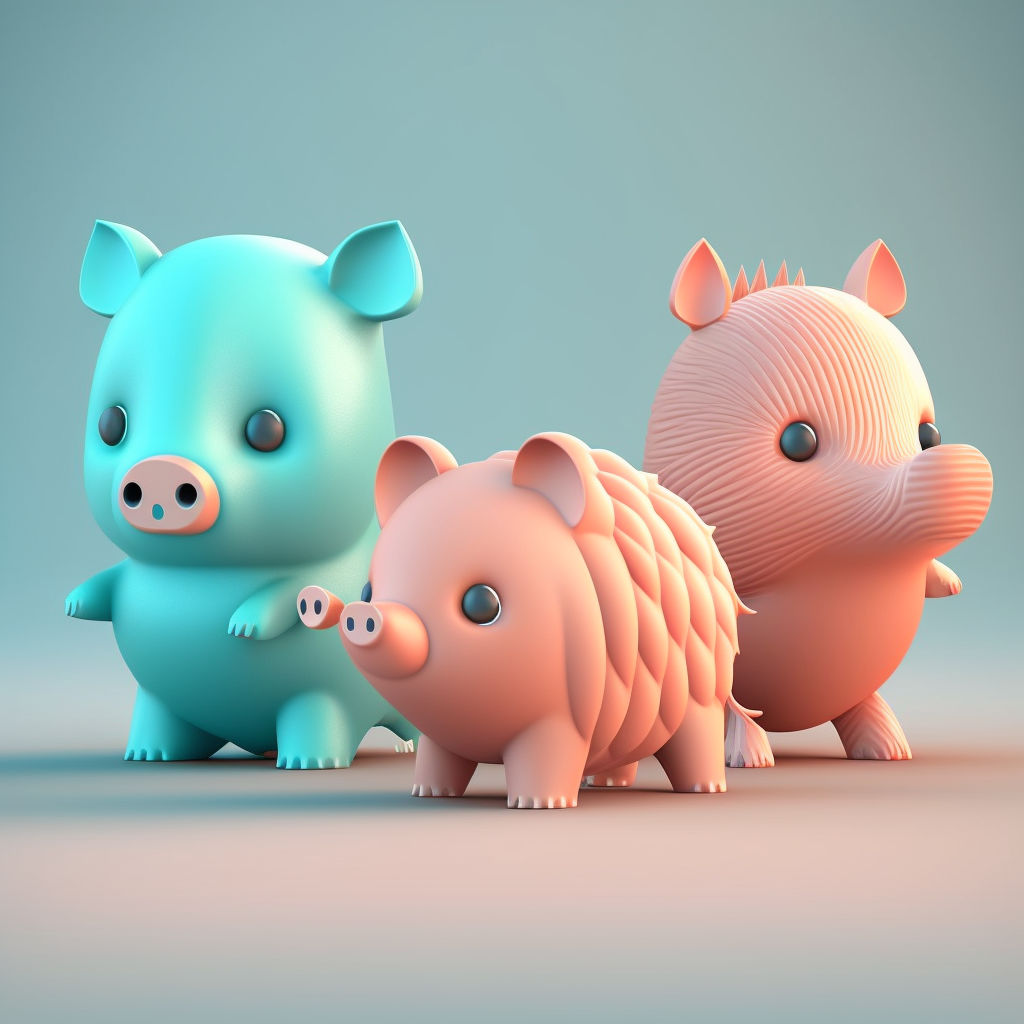
Below are some examples which we have tried on Midjourney Bot on Discord. Prompt : cute animal 3d characters, multiple angles, suitable for websites for 3 year old kids, soft pastel colour, health care

Some companies are also using artificial intelligence to create 3D animal characters for use in video games, movies, and other media. These characters are typically generated using a combination of machine learning techniques and traditional 3D modeling techniques.