
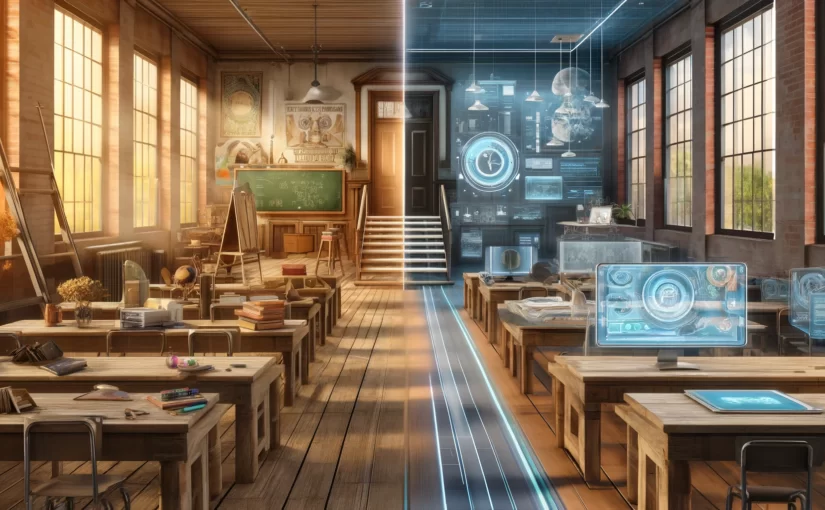
The Artistic Origins
Consider the journey of a design educator over the past couple of decades at India’s top design schools. When they first started teaching, the curricula were heavily steeped in artistic traditions. Students were compulsorily given courses on art appreciation, history of art and design, aesthetics, and the like.
Design students were dutifully immersed in the artistic origins and influences that shaped design movements over the past century. While incredibly valuable, there was a noticeable blind spot: there was almost never any study of the history and evolution of technology itself as a driver of design. At the time, this pedagogical approach tracked with conventional wisdom in the field. The industrial and digital revolutions were still relatively new. Design was taught through the framings and philosophies guided by artistic values.
But as the years progressed, a nagging sense grew that something was amiss. The design world was being reshaped by powerful technological forces. The user-centered paradigm was taking hold, demanding optimization for functional experience above aesthetic considerations. Students needed more than just an artistic grounding.
Resisting Evolution
For a while, there was a strange fundamentalism—a dogmatic devotion to rote processes handed down from past generations. Perhaps rooted in academia’s predisposition towards tradition. Change is difficult, even when surrounding contexts shift rapidly.
In retrospect, the truth was glaring: Digital technology was no longer politely knocking. It had violently barged in and altered everything from visual culture to product and tool design. The shift to user-centricity unleashed massive demand for delightfully personalized experiences, driven by code and software. Designers were suddenly being asked to think like technologists, not artisans. And academia was inadequately preparing them.
Artistic philosophies alone were insufficient to navigate this new world of iPhones, apps, websites, wearables, and emerging digital products/interfaces. Art’s influence on aesthetic sensibilities was being democratized by social media and trends like hyperpersonalization. While art’s societal importance endured, the design paradigm had permanently pivoted pragmatically. Technology was now the paramount driver and canvas. Pedagogy had to evolve. Teaching technology as just siloed software skills wasn’t enough. A true technological mindset and consciousness were needed from day one, just like the artistic lens.
The Technological Takeover
An ethos of “tech-first design” should bleed into every vertical—not just UI/UX but industrial, fashion, architecture and beyond. For digital experiences weren’t niche use cases; they were the new environment. The realization slowly permeated curricula over 5–10 years. Top programmes prioritized human-computer interaction, programming, user research, UI/UX patterns, and systems thinking. Smart designers cultivated multilingual fluency, conversing eloquently in aesthetics and technology. This combination enabled graceful products blending beauty and function.
The transition has not been easy for many tradition-bound design institutions. A significant number of faculty members across various design institutions still resist evolving beyond their artistic comfort zones, clinging tightly to the comfortable but increasingly obsolete models of the past. There is an inherent skepticism and passive resistance toward wholeheartedly adopting a “tech-first” mentality in their pedagogical philosophies.
Transitioning Slowly
In the Indian context especially, design academia has been slow to truly imbibe and integrate technological skills and mindsets as co-equal pillars alongside art fundamentals. While pockets of programs are making positive strides, there remains a predominant fundamentalism—an overt devotion to teaching design primarily through the lenses of aesthetics, artistic heritage and manual processes.
The risks of this inertia are real. Failing to embrace and balance technological mastery with design’s traditional art bases risks leaving entire generations of students ill-prepared for the innovative, product-driven markets they’ll be entering. Their skillsets may prove embarrassingly antiquated in the face of rapidly evolving digital experiences and user expectations.
There is also a danger of overcorrecting by losing sight of design’s invaluable artistic core as excitement builds around prioritizing technological capabilities. The strengths of both disciplines must be thoughtfully interwoven. The path forward, while clear, will require bold leadership and tough decisions. Preserving hallmarks of art education is wise, but continuing to quarantine technology as an ancillary dimension means abdicating design academia’s duty to properly equip students for the modern realities they’ll navigate as professionals.
Design curricula must fully embrace the balanced, interwoven study of aesthetics and technology as co-equal focuses. In today’s world, digital product experiences are not niche use cases that designers can still avoid. They have become the very environment we breathe, the water we swim in. The future is already here; academic models simply need to evolve in parallel to adequately prepare students.
Thanks for your time! I would love to hear about what you think in the comment section.